Folk Floral Dingbats: Where Rustic Charm Meets Modern Design
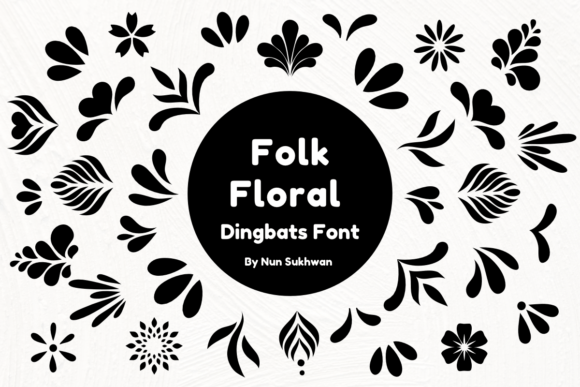
Imagine you're crafting a wedding invitation suite for a summer garden party. You've chosen a beautiful script font for the names and a clean serif for the details, but something feels missing. The design needs a touch of organic warmth, a hint of hand-painted botanicals, without the cost and time of commissioning custom illustrations. This is the exact moment a versatile design asset like Folk Floral becomes invaluable. It’s a premium font that doesn’t carry letters in the traditional sense; instead, it’s a curated library of stylized leaves, blooming petals, and ornate floral clusters, all accessible with a simple keystroke.
A Visual Language Rooted in Tradition
What sets this collection apart is its inspiration. Drawing from the rich heritage of folk art and botanical motifs, each glyph is crafted with a bold, clean silhouette. This isn’t about photorealistic detail; it’s about evocative shapes that carry the warmth of hand-crafted artistry. The designs feel familiar yet fresh, bridging the gap between a rustic farmhouse aesthetic and a contemporary graphic sensibility. Think of the intricate patterns on vintage embroidery samplers or the bold floral prints on traditional pottery—these are the visual echoes you’ll find within this creative font.
The power of these elements lies in their versatility. A single, large floral cluster can serve as a striking focal point on a poster or the centerpiece of a logo design. A scattering of smaller leaves and buds can build a seamless, repeating pattern for packaging design or social media graphics. Because they are vector-based and part of a font file, they are infinitely scalable, ensuring crisp lines whether they’re printed on a business card or stretched across a billboard. This makes them a fundamental asset for any designer or entrepreneur building a cohesive brand identity.
From Concept to Creation: Practical Applications
Let’s move beyond theory and into the studio. How do you actually use these elements to solve design problems and enhance your projects? The applications are surprisingly broad, touching nearly every aspect of visual communication for small businesses and creatives.
- Branding and Logo Design: Incorporate a floral dingbat as a standalone emblem or monogram. It can be used as a secondary brand mark, a divider for text, or an icon for social media profiles. For an artisanal candle maker or a organic skincare line, these motifs instantly communicate a natural, handcrafted quality.
- Packaging and Merchandise: Create custom patterns for tissue paper, box liners, or fabric. Use a single botanical element to accent a product label or hang tag. The clean silhouettes work beautifully with foil stamping, embossing, or simple one-color printing.
- Editorial and Web Design: Break up long blocks of text in a blog post with a floral divider. Use a leaf cluster as a bullet point icon. Add illustrative flourishes to the margins of a digital magazine or website header to guide the reader’s eye and add visual interest.
- Marketing and Social Media: Design eye-catching Instagram story templates, Facebook post backgrounds, or Pinterest graphics. A well-placed floral element can make a promotional sale announcement feel more elegant or a recipe post feel more inviting. They are perfect for creating a consistent visual thread across all platforms.
- Print and Invitations: This is where the font truly shines. Design wedding suites, event programs, thank you cards, and menu layouts with a professional, bespoke look. The ability to mix and match different floral elements allows for endless customization without starting from scratch each time.
Strategic Design: Pairing and Readability
Using a display font like Folk Floral effectively requires a bit of strategic thinking. Its primary role is decorative, so pairing it with the right typographic foundation is key. You wouldn’t set an entire paragraph in dingbats. Instead, think of it as the supporting actor that elevates the lead.
For maximum impact and readability, pair these floral elements with a strong, neutral typeface. A classic serif font like Georgia or a modern sans serif font like Montserrat creates a beautiful contrast. The clean lines of the body text provide a solid visual base, allowing the intricate floral details to pop without causing visual clutter. If your project calls for a script font for headlines, the folk floral dingbats can add complementary texture when used sparingly as accents or section breaks.
Always test your pairings. Place a floral header above a paragraph of your chosen body text. Does the hierarchy feel clear? Is the overall mood cohesive? Remember, the goal is to enhance your message, not overshadow it. The “hand-drawn” aesthetic of Folk Floral adds personality, but it should never compromise the clarity of your core communication, whether that’s a product description or an event date.
Building a Cohesive Brand Toolkit
For a small business owner or creative entrepreneur, investing in a versatile design asset like this is about efficiency and consistency. Instead of hunting for individual botanical illustrations from different sources—which can lead to a disjointed look—you have a unified set of graphics that were designed to work together. This visual consistency is a cornerstone of professional brand identity. It tells your audience that you pay attention to detail and value quality.
Before committing to a commercial font, always review the licensing. Ensure it covers your intended uses, whether for personal projects, client work, or merchandise you plan to sell. A reputable premium font will provide clear licensing terms, giving you peace of mind as you use the assets across your website, printed materials, and digital products.
Ultimately, tools like Folk Floral are about possibility. They put the intricate beauty of botanical art at your fingertips, ready to be deployed with a keystroke. They allow a solo entrepreneur to achieve a level of design polish once reserved for those with large budgets, and they give seasoned designers a new, cohesive set of elements to play with. In a world saturated with generic visuals, these timeless symbols offer a way to inject warmth, heritage, and a distinctly human touch into your work.